What Readers Notice Immediately in a Weak Manuscript

What Readers Notice Immediately in a Weak Manuscript What determines whether a manuscript feels polished or unpolished at first glance Readers rarely need more than a few pages to sense when a manuscript is not working. This reaction is not analytical, and it is rarely conscious. Most readers do not stop to identify narrative structure or diagnose pacing issues in technical terms. Instead, they experience an overall impression — a feeling of friction, distance, or lack of immersion that forms almost immediately. What is often underestimated in the writing process is how quickly that impression solidifies. A manuscript does not have the length of a novel to “prove itself” in the reader’s mind. It has paragraphs. Sometimes only a few pages. And within that space, certain signals become decisive. This judgment is not truly immediate in the mechanical sense; it is cumulative, built from micro-adjustments the reader makes without awareness. A slight hesitation in tone, a moment of confusion about perspective, a sentence that does not quite carry its emotional weight — these things accumulate quietly, until the text either begins to feel inhabited or begins to feel distant. One of the first elements readers notice is the clarity — or lack of clarity — of the narrative voice. A strong voice creates orientation. It establishes tone, rhythm, and perspective in a way that allows the reader to settle into the story without effort. When that voice is inconsistent or uncertain, the reader may not be able to articulate the problem, but they begin to feel unmoored. The narrative feels slightly unstable, as if it has not fully committed to how it wants to be told. That instability reduces trust very early in the reading experience, and once that trust is weakened, everything else becomes harder to sustain. Pacing contributes to this impression, though not in the simplified sense of speed. Readers are not responding to how quickly events occur, but to whether anything is actually moving beneath the surface. A manuscript can open slowly and still feel compelling if there is transformation happening — emotional, psychological, or narrative. But when early scenes remain static, when nothing seems to shift or accumulate meaning, attention begins to loosen. The reader may continue out of curiosity or discipline, but the sense of engagement becomes fragile, as if the story is being observed rather than entered. Character introduction carries a similar weight in these first pages. Readers do not require depth immediately, but they do require distinction. There needs to be something perceptible that separates one presence from another — a way of recognizing not just who is speaking or acting, but why they exist in the narrative space at all. When characters are introduced without that early differentiation, when their emotional contours feel too similar or too undefined, orientation begins to dissolve. And once orientation is lost, investment rarely follows. Dialogue often reveals this problem more quickly than anything else. In strong manuscripts, dialogue is not simply communication; it is pressure beneath language, shaped by intention, contradiction, and emotional subtext. In weaker manuscripts, it tends to flatten into function. It explains, clarifies, or advances information, but it does not carry tension within itself. Even when it is technically well written, it can feel strangely inert, as if the words are arranged correctly but not inhabited. Readers may not consciously identify the absence of subtext, but they feel the absence of life. There is also a quieter divide that emerges between information and experience. Some manuscripts describe events with clarity but do not fully translate them into sensation. The reader understands what is happening but does not quite feel it unfolding. The narrative becomes legible but not immersive, and that distance, however subtle, gradually reduces emotional involvement. What remains is comprehension without presence — a state in which the story is processed rather than lived. Repetition reinforces this sense of stagnation when it appears too early or too heavily. Not repetition in wording alone, but in structure, emotional rhythm, or explanatory patterns that do not evolve. When a manuscript returns to the same kinds of gestures without revealing new dimensions, the reader begins to sense circularity rather than progression. Even strong prose cannot fully compensate for that absence of development, because what holds attention is not novelty alone, but transformation — the sense that something is becoming other than what it was a few pages earlier. Underneath all of this lies something more fundamental: coherence of intent. Readers are acutely sensitive to whether a manuscript feels internally aligned, even if they could never articulate what that alignment would look like. It is not about simplicity or obvious thematic clarity, but about whether the choices of voice, rhythm, and progression feel like they belong to the same underlying impulse. When that coherence is missing, the reading experience begins to fracture in subtle ways. It becomes difficult to understand what to invest in, or what the narrative is quietly asking the reader to hold onto. ༺ Your Unfinished Draft Has a Future — View Ghostwriting Services ༻ What makes all of these signals so significant is that they rarely appear in isolation. A manuscript does not usually fail through a single identifiable flaw. More often, it is a constellation of slight misalignments — none of them decisive on their own — that prevent the text from ever fully stabilizing in the reader’s mind. And because readers do not consciously parse these elements individually, what they register instead is only the final effect: a story that never quite becomes inhabitable, even if nothing appears explicitly wrong. That impression, once formed, tends to arrive faster than most writers expect. Not as rejection, but as distance. A quiet withdrawal that happens before the reader has even named what they are experiencing.
The Psychology of Reader Engagement in Fiction
The Psychology of Reader Engagement in Fiction How Emotional Tension, Character Psychology, and Narrative Structure Shape Reader Attention Some novels are technically flawless and still fail to hold a reader’s attention. Others contain simple prose, familiar plots, or quiet narratives, yet remain impossible to put down. The difference is rarely accidental. Reader engagement is often discussed as if it were purely instinctive — something writers either possess naturally or endlessly chase without understanding. In reality, engagement in fiction is deeply connected to psychology. Readers do not simply consume stories; they respond to them emotionally, cognitively, and even physiologically. A reader continues turning pages because the brain has become invested in resolving uncertainty, maintaining emotional connection, or searching for meaning within the narrative. The experience feels effortless, but underneath that experience, multiple psychological mechanisms are constantly shaping attention. This is why engagement cannot be reduced to fast pacing alone. One of the most common misconceptions in fiction writing is the belief that readers disengage only when “nothing happens.” In practice, readers lose interest when tension disappears. Tension, however, is not limited to action. It can emerge through emotional conflict, anticipation, unanswered questions, shifting relationships, moral uncertainty, or the subtle expectation that something important is about to change… Even quiet literary fiction depends on this principle. The human brain is naturally drawn toward incomplete information. Psychologists often refer to this as the “curiosity gap” — the discomfort created when the mind recognizes missing knowledge and instinctively seeks resolution. Fiction uses this response constantly. A character hides information. A relationship changes unexpectedly. A conversation ends too early. A seemingly insignificant detail appears repeatedly without explanation. The reader keeps reading because the brain wants closure. Importantly, engagement does not require constant intensity. In fact, uninterrupted intensity often creates emotional fatigue. Effective novels understand rhythm. They alternate tension and release, allowing readers to recover emotionally before introducing new uncertainty. This modulation is part of why some books feel immersive rather than exhausting. Character psychology also plays a central role in reader engagement. Readers do not connect with characters simply because they are likable or relatable. They connect because characters appear psychologically believable. Contradictions, fears, irrational decisions, emotional blind spots, and internal conflict all contribute to a sense of authenticity. Perfect characters often feel emotionally inaccessible because real people are rarely internally consistent. Readers become invested when characters behave in recognizably human ways. This emotional investment activates another important psychological response: empathy simulation. While reading fiction, the brain frequently processes imagined experiences similarly to real emotional experiences. Studies on narrative immersion have shown that readers often mirror emotional states described within stories, particularly when characterization feels convincing and specific. This is one reason emotionally resonant fiction remains memorable long after plot details fade. Readers may forget secondary events, but they remember how a story made them feel. They remember emotional tension, vulnerability, anticipation, grief, relief, intimacy, or fear. Engagement is not simply about maintaining attention; it is about creating emotional participation. Language itself influences this process more than many writers realize. Overwritten prose can create cognitive distance by making readers overly aware of the writing itself. On the other hand, excessively minimal prose may fail to generate sensory or emotional depth. Strong narrative writing often creates what psychologists describe as processing fluency: language that feels natural enough to move effortlessly through the reader’s mind while still carrying emotional and atmospheric weight. When prose flows correctly, readers stop noticing sentences and begin experiencing scenes. Pacing functions similarly. Readers rarely measure pacing objectively. Instead, pacing is perceived emotionally. A slow scene filled with emotional tension may feel compelling, while a fast-moving sequence without emotional stakes can feel strangely empty. This explains why some lengthy novels maintain extraordinary engagement while shorter books occasionally feel difficult to finish. The issue is rarely speed alone. It is emotional momentum. Modern reading habits have made these psychological dynamics even more important. Readers are surrounded by constant digital stimulation competing for attention, which means fiction now enters an environment where disengagement happens quickly. A story must establish narrative trust early: the sense that emotional investment will be rewarded. Once readers lose that trust, attention becomes fragile. This does not mean fiction should become formulaic or constantly dramatic. In fact, readers often respond most strongly to stories that feel emotionally honest rather than structurally manipulative. Genuine engagement emerges when narrative tension, character psychology, emotional progression, and thematic meaning work together naturally. ༺ Your Unfinished Draft Has a Future — View Ghostwriting Services ༻ Readers may not consciously analyze these mechanisms while reading, but they feel their effects immediately. They feel when dialogue lacks emotional subtext. They feel when stakes are unclear. They feel when characters stop evolving, when tension dissolves too early, or when emotional resolutions arrive without sufficient development. And they also feel when a novel understands how human attention and emotion truly work. That is the point where reading stops feeling passive. The story becomes an experience the mind actively participates in — and that is what keeps readers returning, chapter after chapter, until the final page.
Why Every Manuscript Needs a Professional Reading Report Before Publication

Beyond One Language: The Hidden Value of Professional Book Translation Expanding your book into new markets without losing voice, tone, or intent. A finished manuscript often feels like a definitive achievement—structured, refined, ready to meet its readers. Yet when a book exists in only one language, its reach remains narrower than its potential. Ideas that could resonate internationally remain confined, and audiences who would value the work never encounter it. For many authors, this limitation appears only after publication, when interest begins to emerge from beyond their primary market. At that point, translation becomes more than a technical step. It becomes the natural continuation of the book itself. Books are not built from information alone. They rely on tone, cadence, emphasis, and narrative balance. Each sentence carries intention, and the overall voice forms part of the author’s identity. Translating such a text requires more than substituting words between languages. Literal translation may preserve meaning, but it often dissolves rhythm and weakens authority. Subtle phrasing becomes rigid. Nuance fades. The result can feel distant from the original—technically accurate, yet stylistically misaligned. This is why professional book translation is best understood as a creative discipline rather than a mechanical process. The goal is not simply to translate language, but to recreate the reading experience. For authors expanding into new markets, this distinction matters. A well-translated book reads as though it were written directly for its new audience. The tone remains consistent, the structure intact, and the voice recognisable. Nothing feels forced or artificial. Readers engage with the ideas rather than noticing the translation itself. Achieving this level of continuity requires careful attention to pacing, vocabulary, and stylistic intent. Each chapter must maintain coherence not only internally, but in relation to the original manuscript. This is where professional book translation services become essential, particularly for authors who want their work to carry the same authority across languages. The process is inherently interpretative. A translator must first understand the architecture of the book: its themes, its rhetorical rhythm, its underlying perspective. Non-fiction demands clarity and precision, ensuring that arguments remain persuasive and structured. Narrative writing requires sensitivity to atmosphere, voice, and timing. Even small shifts in phrasing can alter the tone of an entire passage. A skilled translator balances fidelity with fluency, ensuring that the text feels natural while remaining faithful to the original intent. This equilibrium is what transforms a translation from adequate to seamless. Translation also plays a strategic role in long-term visibility. A book that exists in multiple languages extends its lifespan and influence. New audiences discover it. Professional opportunities expand. International readers engage with ideas that would otherwise remain inaccessible. For business authors, this can strengthen global credibility. For thought leaders, it allows their frameworks to circulate more widely. For storytellers, it opens doors to entirely new literary communities. In each case, translation transforms a completed manuscript into a growing one—capable of evolving beyond its initial publication. Many authors hesitate at this stage, unsure how to preserve their voice across languages. This concern is valid. A book represents not only content, but identity. Professional translation addresses this by prioritising consistency of tone and intention. Through careful reading, stylistic alignment, and iterative refinement, the translator ensures that the final text feels authentic. The result is not a version that merely mirrors the original, but one that carries its essence with clarity and precision. ༺ Your Unfinished Draft Has a Future — View Ghostwriting Services ༻ Expanding a book into another language is not simply about reaching more readers. It is about ensuring that your ideas travel without distortion. A thoughtfully translated manuscript retains its authority, its pacing, and its voice. The structure remains deliberate, the message coherent, and the reading experience intact. With professional book translation, what began as a single-language work becomes something broader—capable of moving naturally across linguistic boundaries while remaining unmistakably yours. The book is already written. Translation allows it to continue its trajectory, extending beyond its original context without losing identity. Your voice does not change; it resonates in new spaces. Your ideas do not shift; they become accessible. With the right approach, translation is not a secondary step, but the quiet expansion of authorship itself. The Scriptorium Have a tale that won’t reveal itself? Private guidance to spark ideas, resolve editorial questions, and refine your manuscript. ༺ SCHEDULE A MEETING ༻
Beyond One Language: The Hidden Value of Professional Book Translation
Beyond One Language: The Hidden Value of Professional Book Translation Expanding your book into new markets without losing voice, tone, or intent. A finished manuscript often feels like a definitive achievement—structured, refined, ready to meet its readers. Yet when a book exists in only one language, its reach remains narrower than its potential. Ideas that could resonate internationally remain confined, and audiences who would value the work never encounter it. For many authors, this limitation appears only after publication, when interest begins to emerge from beyond their primary market. At that point, translation becomes more than a technical step. It becomes the natural continuation of the book itself. Books are not built from information alone. They rely on tone, cadence, emphasis, and narrative balance. Each sentence carries intention, and the overall voice forms part of the author’s identity. Translating such a text requires more than substituting words between languages. Literal translation may preserve meaning, but it often dissolves rhythm and weakens authority. Subtle phrasing becomes rigid. Nuance fades. The result can feel distant from the original—technically accurate, yet stylistically misaligned. This is why professional book translation is best understood as a creative discipline rather than a mechanical process. The goal is not simply to translate language, but to recreate the reading experience. For authors expanding into new markets, this distinction matters. A well-translated book reads as though it were written directly for its new audience. The tone remains consistent, the structure intact, and the voice recognisable. Nothing feels forced or artificial. Readers engage with the ideas rather than noticing the translation itself. Achieving this level of continuity requires careful attention to pacing, vocabulary, and stylistic intent. Each chapter must maintain coherence not only internally, but in relation to the original manuscript. This is where professional book translation services become essential, particularly for authors who want their work to carry the same authority across languages. The process is inherently interpretative. A translator must first understand the architecture of the book: its themes, its rhetorical rhythm, its underlying perspective. Non-fiction demands clarity and precision, ensuring that arguments remain persuasive and structured. Narrative writing requires sensitivity to atmosphere, voice, and timing. Even small shifts in phrasing can alter the tone of an entire passage. A skilled translator balances fidelity with fluency, ensuring that the text feels natural while remaining faithful to the original intent. This equilibrium is what transforms a translation from adequate to seamless. Translation also plays a strategic role in long-term visibility. A book that exists in multiple languages extends its lifespan and influence. New audiences discover it. Professional opportunities expand. International readers engage with ideas that would otherwise remain inaccessible. For business authors, this can strengthen global credibility. For thought leaders, it allows their frameworks to circulate more widely. For storytellers, it opens doors to entirely new literary communities. In each case, translation transforms a completed manuscript into a growing one—capable of evolving beyond its initial publication. Many authors hesitate at this stage, unsure how to preserve their voice across languages. This concern is valid. A book represents not only content, but identity. Professional translation addresses this by prioritising consistency of tone and intention. Through careful reading, stylistic alignment, and iterative refinement, the translator ensures that the final text feels authentic. The result is not a version that merely mirrors the original, but one that carries its essence with clarity and precision. ༺ Your Unfinished Draft Has a Future — View Ghostwriting Services ༻ Expanding a book into another language is not simply about reaching more readers. It is about ensuring that your ideas travel without distortion. A thoughtfully translated manuscript retains its authority, its pacing, and its voice. The structure remains deliberate, the message coherent, and the reading experience intact. With professional book translation, what began as a single-language work becomes something broader—capable of moving naturally across linguistic boundaries while remaining unmistakably yours. The book is already written. Translation allows it to continue its trajectory, extending beyond its original context without losing identity. Your voice does not change; it resonates in new spaces. Your ideas do not shift; they become accessible. With the right approach, translation is not a secondary step, but the quiet expansion of authorship itself.
The Strategic Advantage: Why a Book Is the Most Powerful Tool for Personal Branding
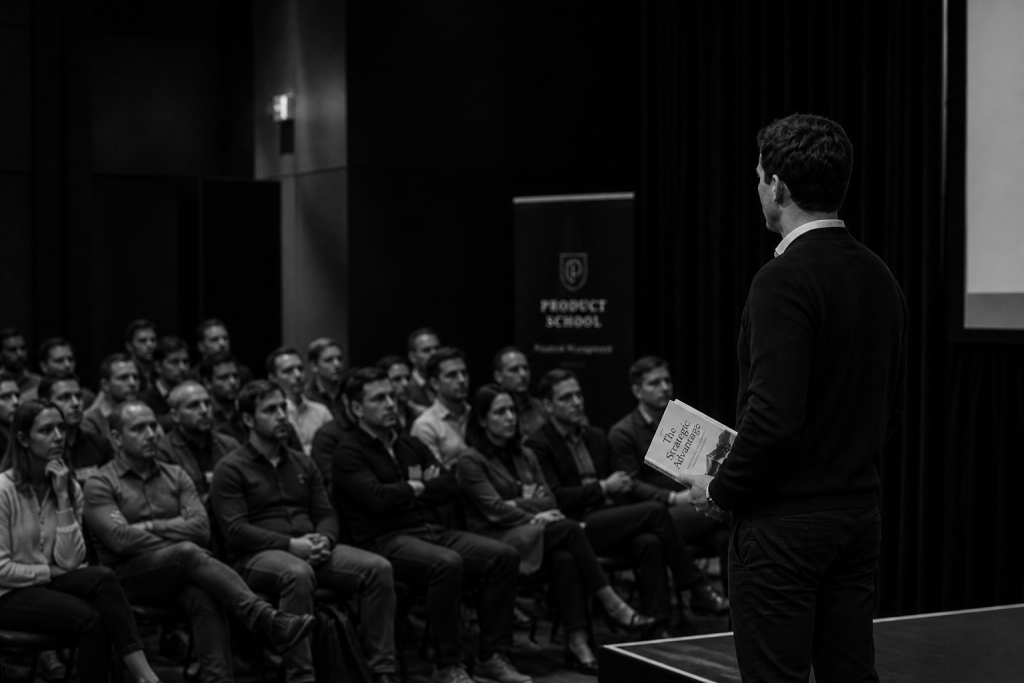
The Subtle Art Behind Professional Ghostwriting Build credibility, attract premium clients, and position yourself as a thought leader There is a particular silence that surrounds unrealised authority. You possess knowledge shaped by years of experience—insights earned slowly, through decisions, failures, and hard-won clarity. Colleagues seek your opinion. Clients trust your judgement. Yet beyond those immediate circles, your expertise remains largely invisible. In a professional world governed by perception as much as competence, this invisibility carries a cost. Ideas that could define your field remain unwritten. Authority that could elevate your brand stays implied rather than established. And in this quiet gap between expertise and recognition, the professional book emerges—not as vanity, but as strategy. A book alters the geometry of credibility. Articles can be skimmed, posts forgotten, videos lost in endless feeds. A book, however, occupies a different intellectual space. It signals depth, permanence, and deliberation. To publish a professional book is to move from participant to authority, from voice among many to a reference point others cite. This is why executives, consultants, entrepreneurs, and specialists increasingly turn toward authorship as a cornerstone of personal brand strategy. Not because they seek literary acclaim, but because a well-crafted book consolidates expertise into something tangible—structured, persuasive, and enduring. Yet the paradox is familiar. The professionals who would benefit most from writing a book are often the least able to do so. Expertise does not automatically translate into narrative. Knowledge exists in fragments: frameworks used in meetings, insights shared in conversations, methods applied instinctively rather than explained. Transforming this into a coherent manuscript requires more than subject mastery. It demands architecture—sequencing ideas, shaping arguments, sustaining clarity across chapters. It also demands time, a resource rarely available to those actively building their careers. Weeks become quarters, notes accumulate, and the intended book recedes into abstraction. This is precisely why ghostwriting for personal branding has become not merely useful, but strategic. A professional ghostwriter does not invent authority; they distil it. The process begins by extracting what already exists—experience, perspective, intellectual positioning—and shaping it into a structured narrative. Themes emerge. A thesis forms. Chapters align. What once lived as scattered expertise becomes a cohesive book designed not only to inform, but to position. The result is not simply a manuscript, but a deliberate brand asset: a text that communicates clarity, depth, and leadership within your field. The impact of such a book extends beyond readership. It influences perception before a single page is opened. A published author commands a different introduction, a different expectation. Speaking invitations follow more readily. Media opportunities shift. Clients approach with increased confidence, already primed to view you as a specialist rather than a generalist. This is the subtle power of authorship: it reframes how others interpret your expertise. Instead of explaining what you know, the book demonstrates it—quietly, persuasively, and at scale. There is also a structural advantage. A professional book becomes the foundation for an entire content ecosystem. Chapters evolve into articles. Frameworks transform into keynote presentations. Case studies become client materials. Rather than producing isolated pieces of content, you operate from a central intellectual asset that informs everything else. In this sense, writing a book is not an endpoint, but an origin—one that supports long-term visibility and consistent brand positioning. For professionals seeking sustainable authority, few tools offer comparable leverage. Still, the hesitation remains understandable. Writing a book feels immense. The blank page suggests months of work, uncertain outcomes, and the pressure of representing your expertise accurately. This is where collaboration changes the equation. Professional ghostwriting services for personal branding are designed precisely for this scenario: when the ideas exist, the authority is real, but the execution requires specialised craft. Through interviews, outlines, and iterative drafting, a ghostwriter translates your thinking into a manuscript that reads as intentional, polished, and distinctly yours. The voice remains authentic; the structure becomes refined. ༺ WHAT YOU KNOW DESERVES TO BE WRITTEN — BEGIN YOUR BOOK ༻ There is a quiet distinction between professionals who are known and those who are recognised as authorities. The difference often lies not in competence, but in articulation. A book provides that articulation. It captures your perspective, defines your methodology, and communicates your value in a form that persists beyond meetings and conversations. In an increasingly crowded professional landscape, this clarity becomes a decisive advantage. Your expertise already exists. The question is whether it will remain dispersed—visible only in fragments—or take shape as something definitive. A professional book does not merely document what you know; it positions you as the person others turn to for guidance. With the right ghostwriting partnership, that transformation becomes not only possible, but deliberate. The authority is yours. The book simply gives it form.
The Subtle Art Behind Professional Ghostwriting

The Subtle Art Behind Professional Ghostwriting Struggling to Write Your Book? Discover the Art of Ghostwriting Services There is a particular kind of frustration known only to writers: the quiet torment of an unfinished manuscript. A story lingers in your mind—rich, intricate, insistent—yet when you sit down to write, the words resist you. Chapters falter, ideas dissolve, and the book you once imagined with such clarity becomes something distant, almost unreachable. If you find yourself here—caught between vision and execution—you are not alone. More importantly, you are not without recourse. This is precisely where ghostwriting services enter, not as a shortcut, but as a refined, deliberate craft designed to bring your story into being. Many aspiring authors struggle not because they lack imagination, but because writing a book demands far more than inspiration alone. It requires time, structure, discipline, and an understanding of narrative architecture that can take years to develop. Modern life rarely allows for such sustained focus. Between professional obligations and personal commitments, even the most compelling ideas are often left to gather dust. Others find themselves paralysed by perfectionism, unable to move forward until every sentence feels worthy—an impossible standard that halts progress entirely. Then there is the question of voice: how to capture tone, pacing, and coherence in a way that feels both authentic and compelling. These challenges are not signs of failure; they are the natural friction of a complex creative process. Yet they are also the very reasons why professional ghostwriting services have become an essential resource for serious authors. To understand ghostwriting properly, one must first discard the common misconception that it replaces the author. In truth, it does the opposite. A skilled ghostwriter does not erase your voice—they study it, inhabit it, and ultimately refine it. The process is deeply collaborative. It begins with conversations, notes, fragments of thought—sometimes little more than an idea with emotional weight behind it. From there, structure emerges. Themes are clarified, narratives take shape, and what once felt intangible begins to solidify into a coherent manuscript. Whether you are starting from nothing or working with an incomplete draft, ghostwriting services for authors provide the framework and expertise needed to transform intention into execution. There is, undeniably, an art to this work. Ghostwriting is not mechanical; it is interpretative. It requires the ability to listen beneath what is said, to detect the rhythm of a voice that may not yet fully exist on the page. A professional ghostwriter balances precision with subtlety, ensuring that the final manuscript reads as though it could only have come from you. This is where experience becomes invaluable. Knowing how to shape pacing, develop narrative tension, and maintain stylistic consistency across an entire book is what separates a draft from a publishable piece of writing. In this sense, ghostwriting is less about writing for someone and more about writing with them—an invisible partnership that results in something tangible, finished, and enduring. For many, the decision to hire a ghostwriter comes at a turning point. You may have a clear concept but lack the time to develop it. You may have begun your manuscript only to find yourself unable to complete it. Or perhaps you recognise that while the story is strong, the execution does not yet meet the standard required for publication. In each of these cases, choosing to engage a professional ghostwriter for hire is not an admission of defeat, but a strategic investment in your work. It allows you to move forward with clarity and purpose, rather than remaining indefinitely in a cycle of unfinished drafts. It is also important to distinguish between ghostwriting and other editorial services. While manuscript editing services focus on refining and improving an existing text, ghostwriting involves a deeper level of development. It can include building the manuscript from the ground up, restructuring entire sections, or rewriting passages to achieve cohesion and clarity. Both approaches have their place, but if your book exists more as an idea than a completed draft, ghostwriting is often the more effective path. The ultimate aim, in either case, is the same: to elevate your work into something that is not only complete, but compelling and ready to meet its audience. ༺ Your Unfinished Draft Has a Future — View Ghostwriting Services ༻ There is a quiet significance in finishing a book. It is a threshold that many approach but few cross. To complete a manuscript is to give form to something that once existed only in thought—a process that is as demanding as it is rewarding. Yet it need not be undertaken alone. Ghostwriting services exist precisely to bridge the gap between intention and completion, offering both the technical expertise and the creative sensitivity required to see a project through. Your story, after all, is not the problem. It never was. The difficulty lies in translating that story into a finished work—one that carries your voice with clarity and confidence. With the right support, what once felt elusive can become defined, structured, and ultimately realised. The unwritten book does not have to remain in the shadows. It can be shaped, refined, and brought fully into the light—ready not only to be read, but to endure.